 PARA Method
Most people would save a note by subject, in a folder called for example, “Psychology.” That seems like a perfectly logical choice. Here’s the problem: the subject of “Psychology” is far too broad to be useful. Imagine your future self a few weeks or months from now. In the middle of your workday, how much time will you have to search through all your notes on such a broad subject?
Projects
- Projects examples: researching new microphone, making work presentation, lose 10 pounds, conduct recruitment drive
- Projects are crucial to being able to prioritize your week, plan your progress, and say no to things that aren’t important.
Areas
- Example: “product development,” “quality control,” or “human resources.”
- As important as projects are, not everything is a project. For example, the area of our lives called “Finances” doesn’t have a definite end date. It’s something that we will have to think about and manage, in one way or another, for as long as we live.
- It doesn’t have a final objective.
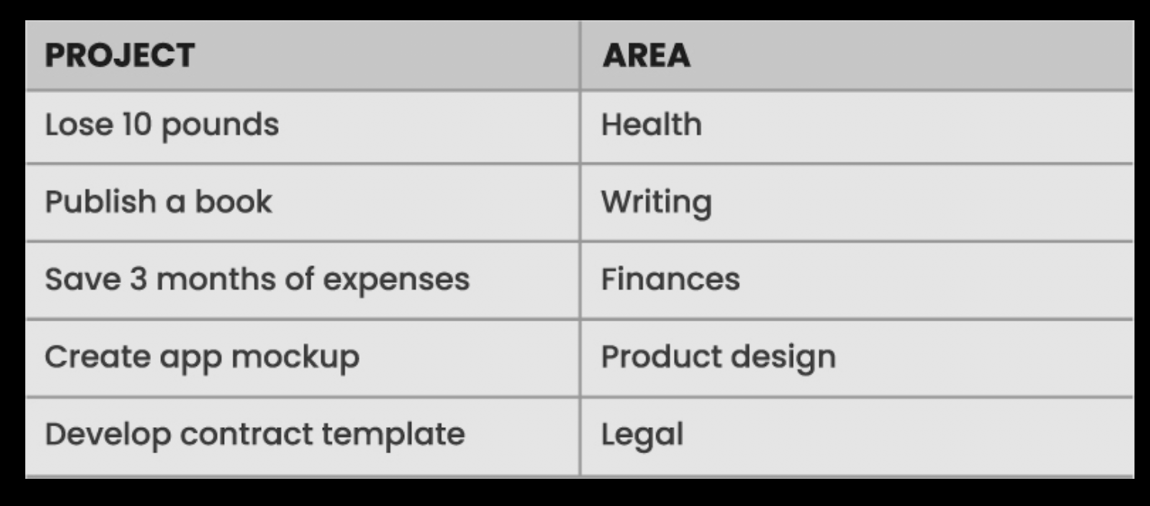
For example tax filing 2024 might be a project (needs immediate attention and has a deadline) while financial management would be the area (where you could lets say put general knowledge about tax management). While immediately actionable or relevant to coming deadline sort of stuff (for example this year’s account statements would go in FY2024 tax filing project). The project would be moved to archive once it’s served its purpose.
Resources
- Examples: beer brewing, hip hop trivia, anime, Pinterest posts
- Both projects and areas have a purpose in your life, and are generally things you are “responsible for”. But if something doesn’t belong to a project or area (probably because it’s a random tidbit of information, or doesn’t have any direct application to your life goals whether they be short term [like a project] or long term [like an area], it can go in resources).
Archive
- Example: canceled projects, an ended relationship, hobbies you’ve lost interest in.
- Anything that has served its purpose, can be moved to archive - to take it out of sight and out of mind. This can include stuff that’s completed, or put on hold.